
Texas District Courts Explained
Texas runs a layered court system, and district courts are the heart of it at the trial level. They are the general trial courts of the state. That means they hear felony criminal cases, family-law matters such as divorce and custody, and the larger civil disputes over money or property. A single judge presides over each district court. Cases there can be serious, and the stakes are often high.
To see where district courts fit, picture the whole state ladder. At the top sit two high courts: the Supreme Court of Texas for civil and family matters, and the Court of Criminal Appeals for criminal matters. Below them are the regional Courts of Appeals. Then come the district courts. Under the district courts are the county-level courts, the justice of the peace courts, and the city municipal courts. Denton County sits inside this statewide structure like every other Texas county.
The Texas Judicial Branch lays out this full structure on its public site. You can view the Texas Judicial Branch court structure for a clear map of each level.
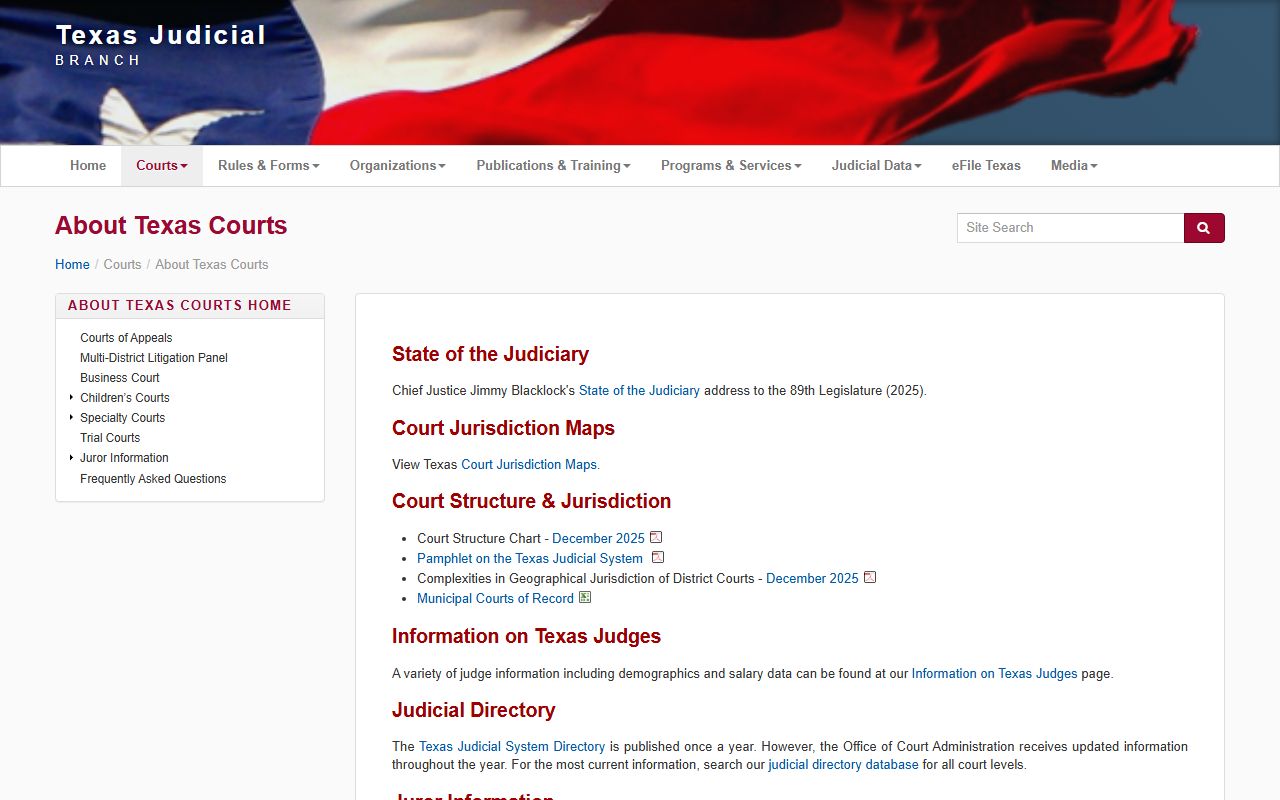
The chart shows how district courts feed appeals up to the high courts and how lower courts feed cases into the system. Knowing this order tells you which court to search first.
Denton County District Court Structure
Texas names its district courts by number rather than by subject. So a county can hold several numbered district courts, and each one may handle a mix of felony, family, and civil work. In Denton County, the 16th District Court is led by Judge Sherry Shipman. That court sits on the 3rd floor at 1450 E McKinney Street in Denton, and you can reach it by phone at 940-349-2310. The 16th District Court also publishes a court docket section and posts a clear ex parte warning for the public.
The District Clerk handles the filings for these courts. Recent District Clerk alerts name the 16th, 158th, and 477th District Courts. The table below lists the numbered courts and offices that the county records confirm, with the judge or officer, address, and phone for each. Where a detail was not published in the source, it is left out rather than guessed.
| Court / Office | Judge / Officer | Address | Phone |
|---|---|---|---|
| 16th District Court | Hon. Sherry Shipman | 1450 E McKinney St, 3rd Floor, Denton, TX 76209 | 940-349-2310 |
| District Clerk | David Trantham | 1450 E McKinney St, 1st Floor, Denton, TX 76209 | 940-349-2200 |
| County Court at Law 1 | Kimberly McCary | 210 S Woodrow Lane, Denton, TX 76205 | 940-349-2520 |
| Probate Court No. 1 | David W. Jahn | 3900 Morse St, Suite 100, Denton, TX 76208 | Contact county |
| Probate Court No. 2 | Christopher J. Everett | 3900 Morse St, Suite 100, Denton, TX 76208 | Contact county |
| JP Precinct 1 | Alan Wheeler | 1 Courthouse Drive, Suite 1100, Denton, TX 76208 | 940-349-3170 |
Note: the county publishes more numbered courts than this, but only the rows above had full contact details confirmed in the source records.
Who Keeps Denton County District Court Records
Every district court needs an office to log and store its files. In Denton County that office is the District Clerk. The District Clerk is the record custodian for the district courts. David Trantham serves as District Clerk, and the office sits on the first floor of the County Courts Building at 1450 E McKinney Street. The phone is 940-349-2200. This is where felony, family, and civil district-court files live.
The clerk does more than hold paper. The office files new petitions, tracks each docket, issues certified copies, and answers record requests. If you need an official copy of a divorce decree or a felony judgment, the District Clerk fills that request. Online search is one thing. A stamped, certified copy that a court will accept is another, and only the clerk can provide it.
For a full profile of the office, its forms, fees, and request steps, see the Denton County District Clerk page. To search case files by name or cause number first, the Denton County court records page walks through the county portal.
Civil, Criminal, and Family Jurisdiction
District courts carry broad power. On the criminal side, they handle felony cases. These are the most serious charges, the ones that can bring prison time. On the civil side, they take the larger money and property disputes, the suits that pass the dollar limits of the lower courts. And on the family side, they hear divorce, child custody, child support, and protective orders. One court can hold all three kinds of cases at once.
This wide reach is why district courts differ so much from county and justice courts. A county court at law in Denton County handles misdemeanors, smaller civil matters, juvenile cases, and other work assigned locally. A justice of the peace court handles Class C misdemeanors, fine-only traffic tickets, small civil claims, and evictions. The comparison table below sets the three side by side using the county court structure.
| Feature | District Court | County Court | Justice Court |
|---|---|---|---|
| Case types | Felony, family, large civil | Misdemeanor, juvenile, statutory civil | Small civil, evictions, fine-only tickets |
| Criminal level | Felonies | Misdemeanors | Class C misdemeanors |
| Family cases | Yes | Limited / juvenile | No |
| Examples | Divorce, felony theft, large lawsuit | DWI, probate, county civil suit | Speeding ticket, small claim, eviction |
Probate work in Denton County goes to the two statutory probate courts, which handle estates, guardianships, and mental-health commitments. For day-by-day hearing detail across these courts, see the Denton County court dockets page.
Denton County District Court Dockets
A docket is the running list of what happens in a case. It shows each filing, each setting, and each hearing in date order. The 16th District Court publishes a court docket section so the public can see upcoming settings. Dockets are useful for parties, lawyers, and anyone tracking a case. But they are not the same as the full case file, which holds the actual pleadings and orders.
One rule stands out on Denton County court pages, and it matters a great deal. Court staff warn the public not to contact a judge directly about a pending or potential case. This is the ex parte rule. It protects fairness so that no one side gets a private word with the judge.
Important: Do not contact a Denton County district judge or court staff to argue or discuss a pending or potential case. Such ex parte contact is barred. Send questions about a docket or setting to the District Clerk, not the judge.
If you have a court date, check the docket ahead of time and arrive early. Bring a valid ID. Expect security screening at the courthouse entrance.
Standing Orders in Denton County District Courts
District courts can issue standing orders that apply to whole groups of cases. Denton County has two recent ones that filers should know. The first deals with artificial intelligence. The District Clerk posted a Standing Order Regarding Use of Artificial Intelligence, effective October 20, 2025. It applies to civil and family cases. The order sets expectations for how AI tools may be used in court filings.
The second order shapes family cases from the start. The county adopted a Standing Order Regarding Children, Property and Conduct of the Parties, effective February 27, 2025. It takes effect when a family case is filed. The order tells both parties how to act toward each other, the children, and the marital property while the case is open. It is meant to keep things stable and prevent harm before a judge can rule.
Both orders are official and current. Anyone filing a civil or family matter in a Denton County district court should read the order that applies to their case. The Texas State Law Library keeps a helpful guide to how Texas courts are organized, which puts these district-court rules in context. You can browse the Texas State Law Library court hierarchy guide for that background.
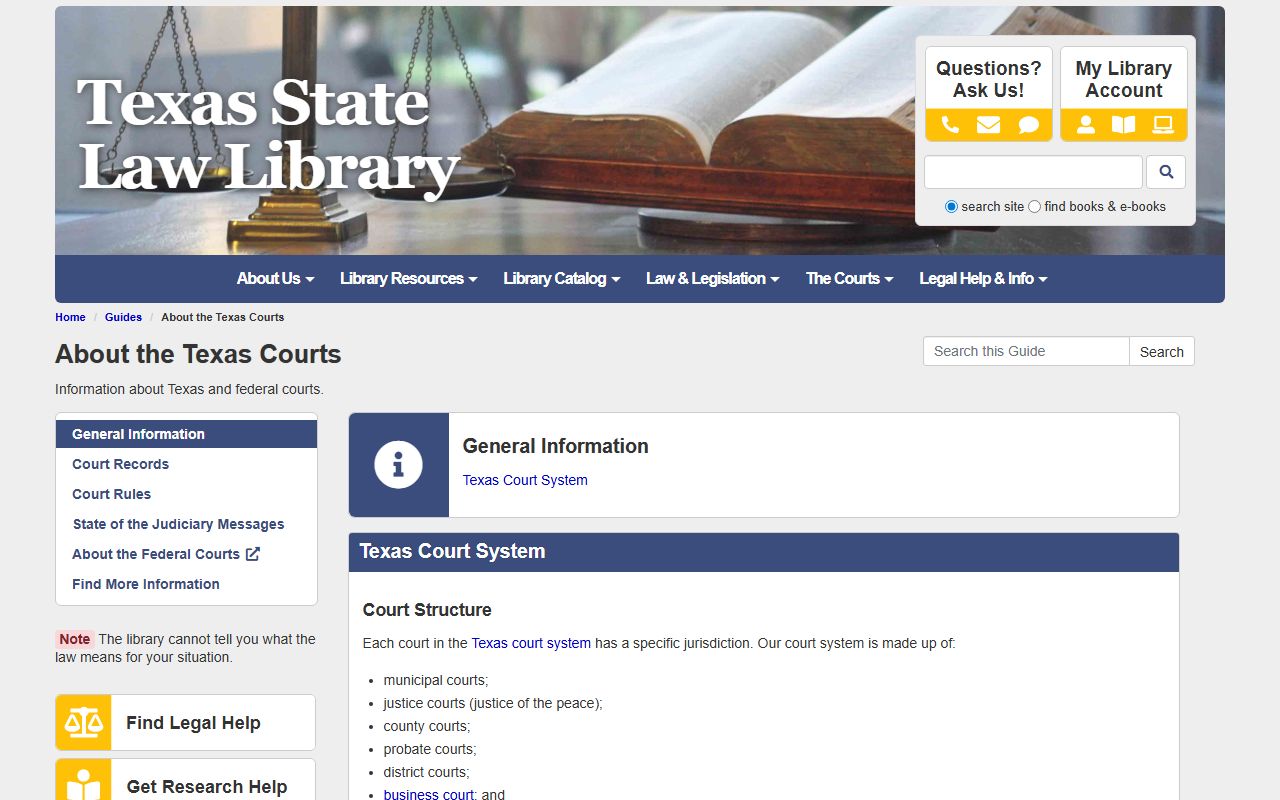
The guide explains each court level in plain terms, which helps when you are deciding where a case belongs.
How a Denton County District Court Case Moves
A case does not jump straight to a district court in every instance, and it does not stop there either. Many matters start lower and rise. Others begin at the district court and then climb to the appeals courts. The flow depends on the type of case and its size. The path below shows the general route from the bottom court up to the high courts.
Case path: Justice Court › County Court › District Court › Court of Appeals › Supreme Court of Texas / Court of Criminal Appeals
Once a district court rules, the losing side can usually appeal. The appeal goes first to a Texas Court of Appeals. These regional courts review the trial record for legal error. They do not hold a new trial. After that, the split matters. A civil or family appeal can move to the Supreme Court of Texas. A criminal appeal moves to the Court of Criminal Appeals. Those two courts sit at the very top of the state ladder, and each handles only its own side.
The State Commission on Judicial Conduct also touches this process through its Rule 12 work on judicial records and conduct. You can read about Rule 12 and judicial records on the commission site.
Rule 12 covers a judicial agency's administrative records, which differ from the case files that go through the clerk.
District Court vs Federal Court in Denton County
Not every case in the county is a state case. Some are federal. People often mix up the two because both use the word "district court." They are separate systems with separate judges, clerks, and rules. The Denton County District Courts are state trial courts. They follow Texas law and the Texas court ladder described above.
Federal cases follow a different path. Denton County sits in the Eastern District of Texas, which is the federal trial court for this part of the state. Federal courts hear matters under federal law, such as federal crimes, bankruptcy, and suits between residents of different states. A state divorce or a state felony does not go there. If you cannot find a case in the county portal, the matter may be federal instead.
For state case files, dockets, and certified copies, work through the District Clerk and the county portal. For lower-court matters that did not rise to a district court, the Denton County justice of the peace courts page covers small claims, evictions, and fine-only tickets.